Your cart is currently empty.
Continue Shopping

Seasonal Styles
Different Wrap Dress Styles and the Shapes They Create
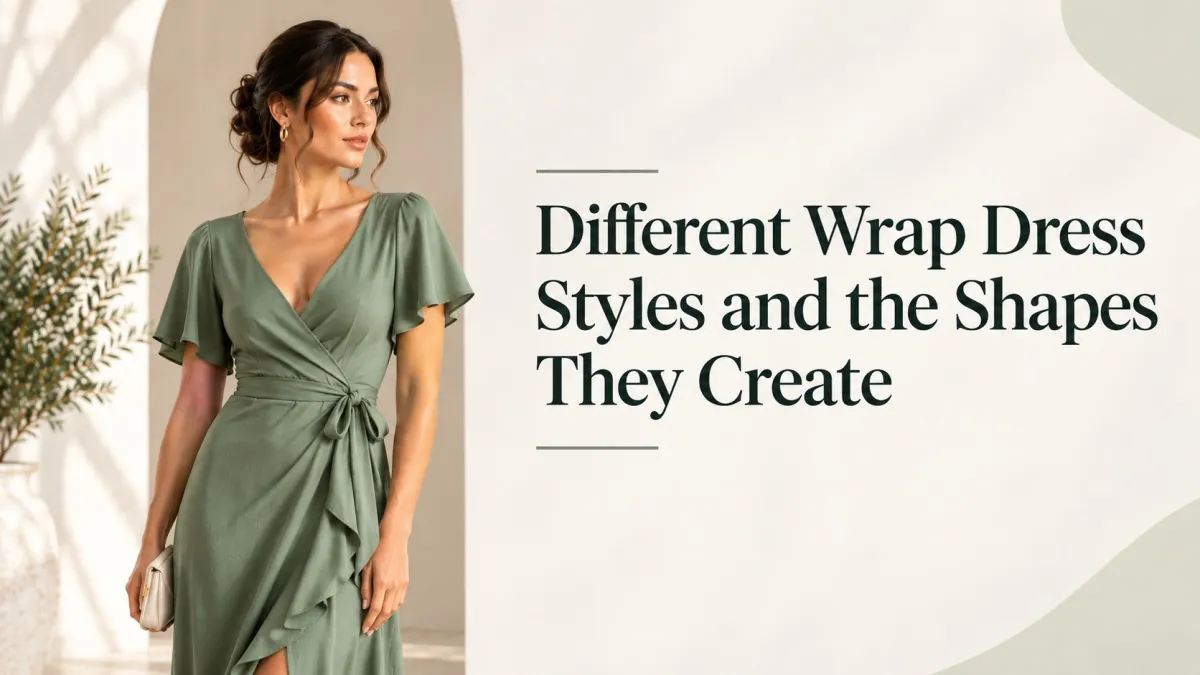
Wrap dresses come in various forms and sizes, larger than their famous crossover front implies. Some have a tight-fitting bodice and narrow skirt, while others may have a gathered bodice or a fuller hem or long flowing lines. A large part of the silhouette is the cut of the dress, but also the fastening and fabric can form the way the dress falls on the body.
These differences can be applied to compare wrap dresses online or when buying similar dresses. A fixed crossover front is not compatible with the same fit as an adjustable wrap, and a fitted midi will look different than a dress with a flared skirt. It is easier to spot these differences if you don't just look at the overall style.
What Sets Different Wrap Dress Styles Apart?
Minor design elements can create the illusion of a different look in the wrap dress, without making any changes to the actual design.
- Neckline: If it is deep V, it will give a more open front; if it is shallower and it is crossed over, it will be more covered.
- Waist tie: A Front, Side or Back tie alters the finish around the waist. Some designs have a thin belt, others include a wider band of fabric ties.
- Sleeves: Fitted sleeves have a simple line. Puff, flutter and flared sleeves provide volume around the shoulder and arm.
- Hemline: An even hem will give the dress a clean finish, an asymmetric hem will introduce an angled line.
These details frequently go hand in hand with one another. For example, a dress with full sleeves and an off-symmetrical hem line is different from a dress with narrow sleeves and a straight hem line.
True-Wrap vs Faux-Wrap Dresses
The main difference is how the crossover front is secured.
True-wrap dresses are completely untied. One panel is laid over the other one with ties to keep the dress up. The inner panel might be fastened with an internal tie or loop prior to the outer tie.
The waist can be adjusted to a certain extent and the neckline and skirt line may change while moving. Depending on the cut and the dressing method, the amount of coverage varies.
Faux-wrap dresses have a crossover front that is sewn onto the dress. They can be zipped on or off, and a few have a decorative tie around the waist. The front is not opened like a proper wrap.
The fit is determined by the cut and size rather than an adjustable wrap fastening.
Feature
The fit is determined by the cut and size rather than an adjustable wrap fastening.
Both designs are not inherently superior. A true wrap has a certain amount of freedom around the waist and a faux wrap has no freedom. Look at the pictures on products and the fastenings, not the name, when shopping online.
Wrap Dress Styles from Fitted Midis to Flowing Skirts
The biggest difference between wrap dress silhouettes is the skirt. Four common shapes illustrate the range.
Fitted midi: The narrow skirt hugs the body from the waist and hips with the hem running somewhere between the knee and the ankle. The impact is not a huge skirt, but a well-contoured silhouette.
Gathered skirt: Pockets of added material below the fastening, forming soft pleats. The skirt can be a bit full or more shaped based on the amount gathered.
Flared or tiered skirt: A skirt that flares out toward the bottom. If you want to create volume, you can do so through individual layers of fabric that create a tiered look.
Long, fluid skirt: Maxi and midaxi are long skirts reaching down to the ankle, or to the floor. The length of the skirt can be close to the waist or it can be free.
Silhouette doesn't necessarily mean length. Fitted maxi and full midi dresses may have more similarities in skirt shape than two dresses of the same length.
How Fabric Affects Wrap Dress Fit and Shape
The material that a dress is made of can influence its fit, ranging from a form-fitting silhouette to a more structured and defined look.
- Jersey: Jersey is a soft and stretchy fabric used for fitted wrap dresses. The fit compliments the human body better than most woven fabrics.
- Cotton: Woven cotton may have a crisp appearance, especially in fuller skirts. It's normally less stretchy than a jersey.
- Viscose crepe: This is a crepe with a less stiff drape and a flowing look, as opposed to a stiffer woven fabric.
- Satin dresses: They often have a glossy and smooth texture, which can enhance their aesthetic appeal. The weight has an impact on the softness or the folds of the skirt.
- Ponte and structured crepes: They are thicker and more stiff than other jerseys and viscose, and suitable for a dress with a more structured silhouette.
The difference is particularly noticeable when the cut stays the same. As with any type of jersey fabric, a fitted wrap dress will likely fit closer to the body than the same style dress made of a stiffer fabric.
Which Wrap Dress Styles Suit Different Occasions?
Everyday wear: Cotton and jersey wraps for weekend and daytime wear, and looser fit for casual wear.
Work and smart-casual settings: A wrap dress might look more organized with structured fabrics and a tight neckline. The second is the type of dresses worn at work.
Weddings, dinners and parties: Flowy crepe-like fabrics, satins and longer skirts can offer a different alternative to day to night wear. For a true wrap dress, make sure the neckline and skirt overlap do not slip when sitting or moving.
The occasion does not dictate the style alone. Even if wearing both at the same time, a wrap with a clear cut may be very different in appearance to a casual shirt design made of cotton.
Choosing Between Different Wrap Dress Styles
Each of these factors—fastening, silhouette, and fabric—has an impact on the overall appearance of a wrap dress. A true wrap will be a bit more flexible at the waist, whereas a faux wrap will keep the crossover in place. The length of a skirt varies from fitted to full, and the fabric of a skirt dictates the way the skirt hangs.
If two designs appear similar on the surface, these differences should be taken into account when comparing wrap dress styles. The true understanding of each dress comes when you look past the label and understand the way it's made and the silhouette it forms.

Weekend Discount Coupon

Secure Payment Methods

Track Your Package
