Your cart is currently empty.
Continue Shopping

Seasonal Styles
Prom Dresses in the UK for 2026, Styles, Silhouettes & Trends
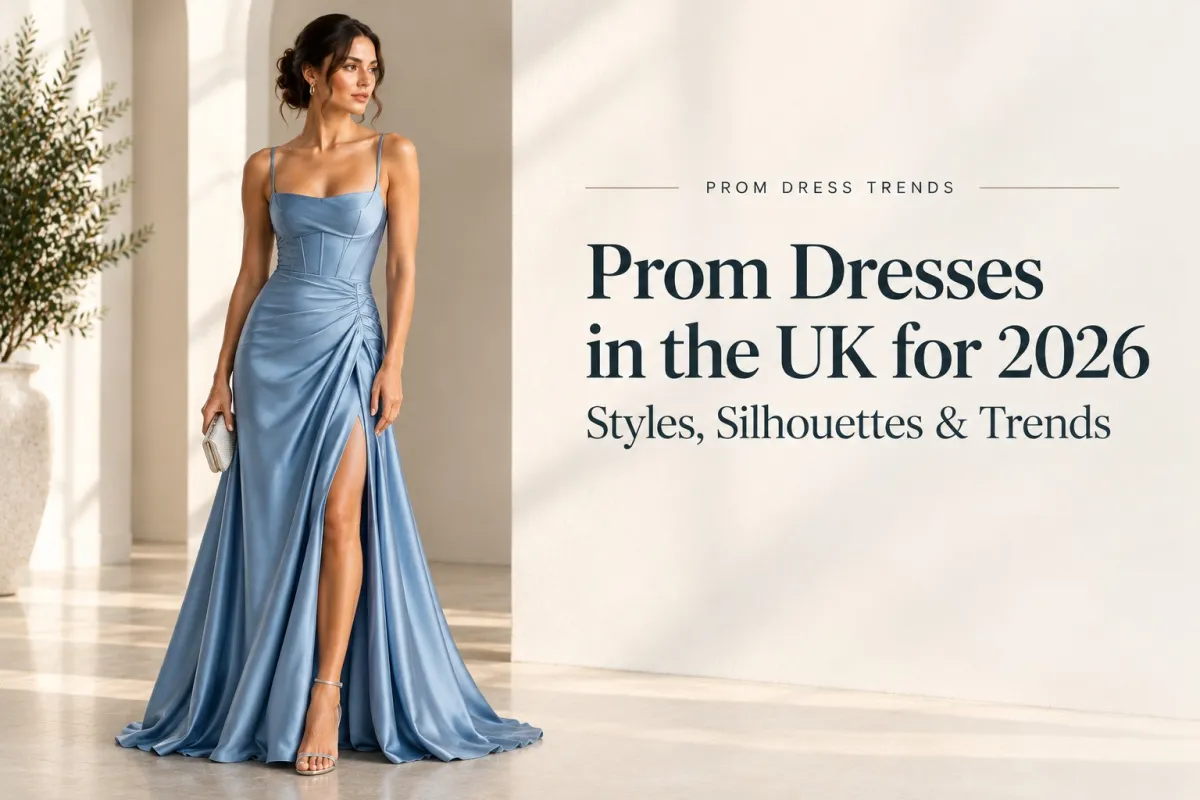
In the UK, prom dresses come in a variety of styles, from full-length gowns to fitted satin dresses and shorter styles. When deciding on a prom look for their Year 11 or 13 prom, the range of choices comes in various shapes, fabrics and details. Parents can assist their children in searching and also should check the style and see what fits the event.
2026 Prom Dresses feature structured bodices, fuller skirts and cleaner lines. It is easier for you to make comparisons and decide which design you should choose based on the difference between these designs.
Types of Prom Dresses and Their Silhouettes
The silhouette outlines the silhouette of a dress. Some styles have fullness in the skirt, others are full around the body or do not fall as straight down the body.
These styles can overlap. The A-line dress may be chiffon or structured satin or a ball gown may have a corset bodice. The mermaid and trumpet dresses look very similar, but the mermaid dress starts flaring at the waist whereas the trumpet dress starts flaring at the hips.
The silhouette is useful to narrow the choices down. Fabric, construction and embellishment can then cause dress variations between dresses in the same category.
Prom Dress Lengths From Mini to Floor-Length
The length of a prom dress alters the proportions of a prom look. There is still a familiar option of floor length gowns along with midstip and shorter lengths for those that prefer a different finish.
Floor-length prom dresses extend to the floor or close to it. They may have full skirts, fitted cut, flowing fabric or decorative trains. This is the length of both traditional ball gowns and simpler evening dresses.
Midi prom dresses are considered to be knee to ankle length. They can be straight or flared (as they come in a skirt) or they can be fitted (as they come in a fitted skirt). A shorter hem is different from a full length gown, but does not necessarily imply a less formal gown.
Short prom dresses include mini and knee-length styles. Some are flared out skirts and structured bodices, others are fitted or decorative finishes. They are an alternative to the traditional long gown.
High-low prom dresses have a shorter front hem and a longer back. This imbalanced length provides action and incorporates elements of shorter and longer lengths.
Students and parents can consider the appropriate lengths based on the event's dress code, venue and school expectations. Early review of these features can also help to eliminate choices.
The Design Features That Set Prom Dresses Apart
The silhouette outlines the shape, but the construction and finish outline the character of each dress. These details can be helpful in distinguishing dresses of similar shape, and are found in many forms.
Corset bodices
Corset-style bodices feature structured panels, seams or boning for a dress that is outlined in the upper section. They are also available in full ball gowns and fitted gowns. There are plain front panels to be sure and there are lace or beaded or decorative stitching panels.
Draping, ruching and layered skirts
Ruching is a fold of fabric, typically across the waist, bodice or hips. The draping is more relaxed or unbalanced, to form the dress. Ruffles and tiered skirts have an effect of adding volume and movement, but not detailing around the body.
Necklines, sleeves and back details
There are various neckline finishes, such as halter, sweetheart, square and off the shoulder. Sleeve details, asymmetric shoulders, open backs and lace up are other variations that don't necessarily alter the silhouette.
These features can make a significant difference in the final appearance. A simple column dress with a halter neckline is different in character from one with a strapless bodice and an open back, although the dress lines are similar.
Fabrics and Embellishments
The fabric is a key factor in the way a dress hangs, its shape and the way it reflects light.
- Satin gives a smooth finish, from simple column dresses to structured gowns.
- Tulle and organza are used to add some lightness and volume, especially in fuller skirts.
- Sequins and beading lend a touch of sparkle to an outfit, or strategically, a particular area.
- Lace and floral appliques introduce Texture and decorative elements.
- Crepe and jersey can create a cleaner outline, especially in fitted and column styles.
Dresses can be made from a variety of finishes, or a mix of several. Both methods aren't exclusive to the category and both can come in multiple silhouettes.
Prom Dress Trends Seen in 2026 Collections
Prom collections in 2026 show contrasting approaches to formal dressing. There are various cuts of structured gowns that go with simpler ones; the main contrast being in the cut, volume and finish.
- Corset-led designs are often paired with various bodices and skirts, from full ball-gown silhouettes to fitted silhouettes.
- Fuller skirts and layered details lend volume, especially in traditional more formal styles, tulle, ruffles, and tiers.
- Sleek satin dresses are a fresher choice than those with a lot of detailing in them, particularly for column and fitted gowns.
- Decorative finishes have come to include beading, sequins, lace and floral appliqués. These details are used sparingly in some designs, or in others, they are the main feature.
- Distinctive necklines and backs give familiar silhouettes a different finish through halter shapes, asymmetric cuts and open-back designs.
These are design directions visible in current prom collections, rather than a ranking of the UK's best-selling dresses. Individual designs may combine several of these features, and the range available will vary between retailers.
Finding the Right Prom Dress Style
Comparing the different lengths, fabrics and silhouettes of prom dresses can make the choice simpler for people. Line dresses flare slightly at the waist and ball gowns are fuller. Both the mermaid and trumpet styles are fitted, but differ in where the skirt expands.
Fabric and construction also have an impact on the overall appearance. A satin column dress will not look the same as a layered tulle gown, and corset bodices, draping and embellishment will create more variety.
The variety of prom dress styles in 2026 offers students the option to select from full gowns, fitted styles, and more straightforward formal dresses. This will vary according to preference, the nature of the event, its dress code and budget and will help the students and parents to narrow down their choices.

Weekend Discount Coupon

Secure Payment Methods

Track Your Package
