Your cart is currently empty.
Continue Shopping

Seasonal Styles
Draped Dress Trends 2026 and the Rise of Softer Silhouettes
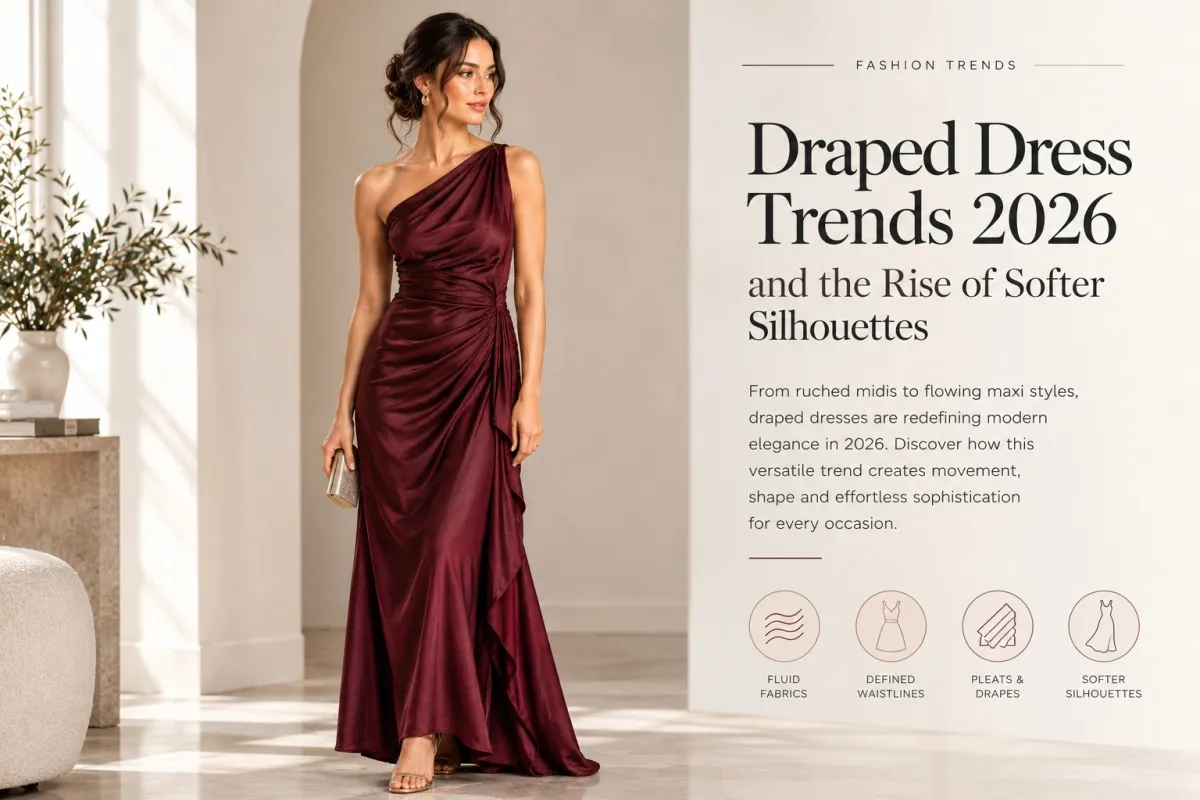
Draped Dress Trends 2026 and the Rise of Softer Silhouettes
In 2026, draped designs are becoming popular, ranging from form-fitting midis with pleated fabric to longer skirts that feature pleated drapes. The fascination is that fabric is used to make shape and movement but not exclusively.
Draping can also be used for fitting a style with a waistline or for covering a bra. It's being incorporated into designers' work to define fitted designs and to tone down a skirt or give it a more sculptural shape. The interesting aspect of the UK dress trends is the different manifestations that this technique can have in casual and special occasion clothes.
What Defines a Draped Dress?
A draped dress is a dress that is formed by the way the garment is draped and hangs. The material can be gathered, twisted or folded around the neck, waist, hips or skirt.
Look for these features:
- Folds and cascades that generate movement in the fabric.
- Gathered sections that add texture or shape around a particular area.
- Details at the neck line, waist and/or hem which are not identical.
- Fluid, or close-fitting, shapes as needed by the arrangement of the fabric.
Draping is not a specific silhouette, but rather a method of construction. The dress may conform to the body shape or have a more relaxed fit with draping as a key element.
Four Draped Dress Styles to Know
There are several types of draping that produce various effects. This is why there are similarities and differences between draped dresses.
Ruched dresses
A dress with the folds of fabric, or ruches, gathered and repeated close together, typically at the waist, sides or hips. The folds give the garment its texture and can help to define a close fitting silhouette. This dress style is popular with jersey, particularly for fitted mid-length styles suitable for dinner and evening attire.
Asymmetric draped dresses
The designs of the fabric are placed on the dress in an asymmetrical way. A diagonal line across the neckline or a gathered piece on one side of the waist or an asymmetrical skirt can create an interesting silhouette. The effect is not made by using any other decorations.
Softly gathered dresses
Soft gathers are used to pull fabric in at one point to create more fullness or folds. This effect will be softer compared to close ruching. This technique can be applied to cotton and viscose dresses to create some movement without the super tight fit.
Sculptural draped dresses
Sculptural draping is the technique of creating controlled folds, twists or draped panels to develop the shape. The fabric may be worn as a wrap around the body or form an identifiable line around the neckline or the skirt. The designs also show that drapes can be shaped and even planned, rather than just free-flowing.
Why Draped Dresses Are Gaining Attention in 2026
Draping is showing up in various different ways in the 2026 collections. Others feature close-fitting jerseys and gathered details and others may make longer lines that flow in folds or shapes.
Designers like Roksanda, Simone Rocha and Erdem showcased varying interpretations of shape and fabric at London Fashion Week's Autumn/Winter 2026 collections. Another characteristic of Di Petsa is its unique body-conscious draping. In these examples, the technique is used to produce various effects, such as in-fitting fabric and folds that define a more dramatic silhouette.
Draping and gathering also play a role in the Spring/Summer 2026 Chanel dresses; knotted maxi dresses appeared in the collection. The technique can be applied to fitted or traditional midi-outfits or even evening gowns.
The take away with UK fashion is that lots of designs are now incorporating draping. A gathered waist can define a simple midi, a flowing skirt can create movement and folds can outline a dress. The draping is another way to look at the current styles of dress without overtaking fitted or structured styles.
Draped Dresses for Different Occasions
The fabric, cut and amount of detail all affect how formal a draped dress looks. The construction alone does not determine where it is suitable.
The placement of the folds also affects the overall look. Draped around the waist, it's a different form than gathers around the neckline or a flattering bunching of folds around the skirt. The position of the fabric gives clues to the different shapes that two draped dresses can have, even if they are constructed similarly.
Draped, Ruched or Structured Dresses?
These terms describe different construction features, although one dress can combine several of them.
For instance, a ruched waist and draped skirt are possible for a dress, or a structured bodice with flowing material underneath. The most distinguishing aspect is the element that provides the overall design personality.
Understanding these differences also enables the understanding of why two “draped” dresses can look different. They may be set and pleated, or you might want a more relaxed shape with wider pleats.
Why Draped Dresses Are Worth a Closer Look
Designers use draping to create a variety of shapes from close-fitting, ruched midis to flowing dresses and sculptural gowns. It is not a specific silhouette but the versatility that are what makes this style so appealing today. The fabric that makes up the shape is definitely the one that everyone interested in 2026 fashion will be able to see. All the folds, side pleats, and fuller fabrics in the skirt can change the look of a dress as long as it does not change the length and the overall style of the dress.

Weekend Discount Coupon

Secure Payment Methods

Track Your Package
